Embedded Systems
Why Multi-Core Embedded Architectures Are Necessary for Modern Workloads
 September 12, 2026
 5 minutes read
 241 Views




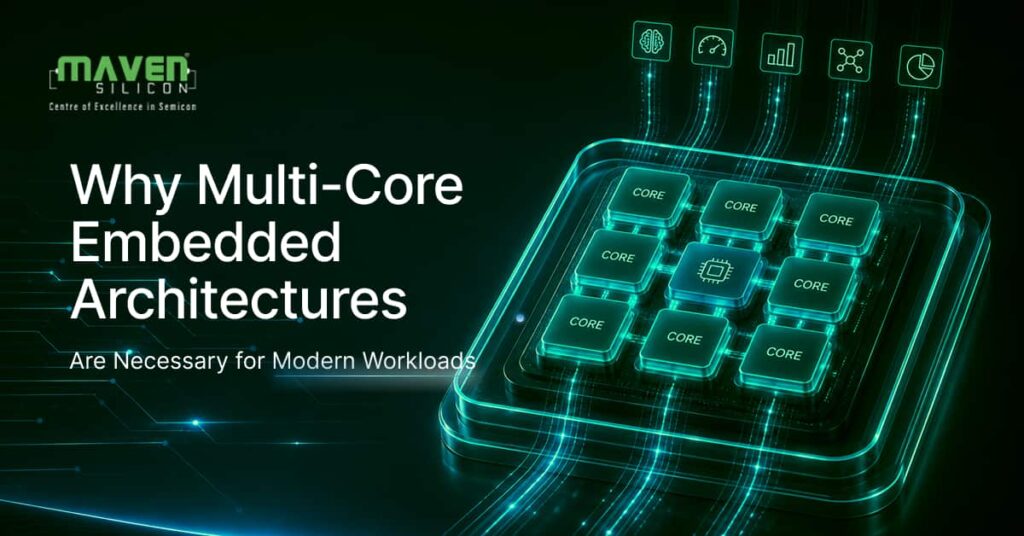
Table of Contents
- Introduction
- What Is a Multi-Core Embedded Architecture?
- Why Modern Embedded Workloads Require Multi-Core Processing
- Key Benefits of Multi-Core Embedded Architectures
- Multi-Core vs. Single-Core Embedded Architectures
- Applications of Multi-Core Embedded Architectures
- Challenges in Multi-Core Embedded System Development
- How to Choose the Right Multi-Core Embedded Architecture
- Future of Multi-Core Embedded Architectures
- Conclusion
- Frequently Asked Questions
Key Takeaways
- AI, IoT and autonomous workloads need parallel processing single-core chips cannot handle.
- Multi-core embedded architectures split tasks across cores, improving speed, power efficiency and real-time response.
- The embedded computing market is growing fast as multi-core design becomes the default choice.
- Choosing the right architecture depends on workload type, power budget, safety needs and toolchain support.
- Engineers who understand embedded system architecture gain a real edge in semiconductor and IoT careers.
Introduction
Think about how many tiny computers surround you. Your smartwatch, your car and your smart speaker all run on embedded devices working quietly in the background. As these gadgets take on heavier jobs like voice recognition and live analytics, one core cannot keep up. That is why multicore embedded systems have moved from nice-to-have to necessity. This blog explains why multi-core designs matter for your career.
What Is a Multi-Core Embedded Architecture?
A multi-core embedded architecture packs two or more processing cores onto one chip, running several tasks at once instead of queuing them.
For newcomers, here is the embedded devices meaning in short: purpose-built computing systems, combining hardware and software, designed for specific functions within a larger product. Multi-core designs build on this idea, covered hands-on in Maven Silicon’s embedded systems training :
- Two or more CPU cores on one silicon die
- A shared or distributed memory system
- An interconnect fabric for fast data exchange
- A scheduler assigning tasks to the right core
Why Modern Embedded Workloads Require Multi-Core Processing
Today’s embedded system architecture must handle workloads that barely existed a decade ago. AI inference, sensor fusion and secure connectivity often run together with tight timing demands, well covered in Maven Silicon’s ARM-based training.
This shift shows in the numbers. The embedded computing systems market is set to grow from USD 114.24 billion in 2025 to USD 187.02 billion by 2031, at an 8.55% CAGR, per Mordor Intelligence. Modern workloads typically demand:
- Simultaneous AI and control execution
- Real-time responsiveness for safety-critical functions
- Fault isolation between cores
- Headroom for updates without hardware redesign
Key Benefits of Multi-Core Embedded Architectures
- Higher Throughput: Splitting work across multiple core units lets a device sense, compute and communicate together, as taught in Maven Silicon’s RISC-V programmes.
- Better Power Efficiency: Idle cores power down individually, so energy goes only where needed, which matters for battery-run devices.
- Improved Reliability: If one core faults, others keep running, giving graceful degradation instead of a total shutdown.
- Scalable Performance: Heavier tasks go to powerful cores, lighter ones to efficient cores, a strategy central to smart multiple core design.
Multi-Core vs. Single-Core Embedded Architectures
| Aspect | Single-Core Architecture | Multi-Core Architecture |
|---|---|---|
| Task Handling | Executes one task at a time | Runs multiple tasks in parallel |
| Processing Speed | Limited by clock speed alone | Higher throughput via parallel cores |
| Power Efficiency | Fixed power draw regardless of load | Cores scale power to actual workload |
| Real-Time Response | May lag under heavy multitasking | Dedicated cores maintain responsiveness |
| Design Complexity | Simpler and cheaper to design | More complex, higher upfront cost |
Applications of Multi-Core Embedded Architectures
- Automotive Systems: ADAS, infotainment and battery management run concurrently, and sound modern processor design keeps safety functions contention-free.
- Industrial Automation: Factory controllers dedicate cores to motor control, diagnostics and networking, staying responsive, as covered in Maven Silicon’s SoC design certification.
- Consumer Electronics: Smart speakers and wearables use multi-core chips for voice recognition, connectivity and display rendering on minimal power.
- Healthcare Devices: Portable monitors process vitals, run alerts and manage transmission on separate cores, an approach built on sound modern processor design.
Challenges in Multi-Core Embedded System Development
- Coordinating memory access without bottlenecks
- Debugging race conditions under real-world timing
- Balancing thermal output as cores multiply
- Writing software that truly exploits parallelism
- Meeting certification demands in embedded system architecture
How to Choose the Right Multi-Core Embedded Architecture
- Map workloads to see which need a multiple core processor
- Check power budgets against battery or thermal limits
- Confirm toolchain and RTOS support, ideally via Maven Silicon’s embedded systems internship
- Evaluate safety certification needs for your use case
- Plan for scalability so the design does not age fast
Future of Multi-Core Embedded Architectures
Multi-core designs will only grow more central to embedded strategy. Nearly 64% of embedded systems already integrate multi-core processors, per Global Growth Insights, and that share keeps climbing as edge AI and connected devices multiply. Heterogeneous cores and AI-optimised silicon will shape the next generation of multicore embedded systems.
Conclusion
Multi-core embedded architectures are not a passing trend, they are the practical answer to heavier workloads. Whether you design automotive systems, wearables or industrial controllers, understanding multiple core processing shapes how well your product performs.
Ready to build these skills? Maven Silicon’s Executive PG Certification in VLSI SoC Design walks you through real architecture design.

Share This Post:


75,221
SUBSCRIBERS
Subscribe to our Blog
Get the latest VLSI news, updates, technical and interview resources
